Showing posts with label Moderation. Show all posts

Wednesday, 13 March 2024

Moderation - every professional business's key to reviews

With apologies to regular readers, but this subject is so vital - it is at the core of everything we do for our client businesses and their customers. We're going to keep this article brief - but we will include links to more detailed information and analysis for those who want to mine further down into this vital aspect of managing a business's online reputation.

Here goes...

1.  What is moderation?

This is one of the most important questions we are ever asked - and one of the most important services we ever provide, to both our business clients and their customers. So let's look at a real example; here is a review, posted through the business's website and picked up - pre-publication - by our moderator...


We have purposely chosen this review as it is an excellent example of the kind of review that, if posted straight to Google, would remain on the business's Google page for the foreseeable future; there is nothing in the review that would give us cause to think there was any chance of an appeal to Google succeeding as it does not remotely infringe any of Google's terms and conditions.
 
Indeed, on the face of it, the review is an entirely genuine opinion and record of a consumer's - in this case a patient's - interaction with the business - in this case a medical practice. Also, on reading, it is a pretty convincing argument not to use the business. And therefore potentially hugely damaging.

So: what happened during the moderation process? 

Our moderator acknowledged the review by messaging the reviewer to tell them that we would be consulting the business before publishing the review. Simultaneously the review was sent to the business for comment. We make it completely clear to businesses that their response must be with our moderator by close of business the same day (if a business wants to be sure of provoking a review direct to Google, then any delay at this point is a good way of ensuring that happens). 

In this instance the clinic reverted to our moderator the same morning, addressing each point in the review in turn.  This response was forwarded, immediately, to the reviewer who was then invited to do one of three things:

    • Amend their original review
    • Have their original review posted
    • Message the business via our moderator and leave the review unposted
In this case, as happens in so many*, the latter course was chosen by the reviewer...


Not only the right outcome but the fair outcome. The clinic's reputation was protected and the relationship with their patient was restored. Both parties benefitted.

*The overwhelming majority of consumers - especially where there is a professional ongoing relationship or service at stake - are entirely receptive to a full and truthful explanation of the facts of the matter under review. Indeed, they are often grateful in the extreme for our moderator's intercession.


Moderation is the act of 'having a review read and analysed for factual accuracy and/or misleading statements' by a person independent of the business under review. It is the only legal way for businesses in the UK (and the EU) to ensure that, as far as possible, their reviews are an accurate reflection of their business and its services.

2.  If our moderator finds either of those - factual inaccuracies and/or statements with the potential to mislead someone who may rely on the review (a potential client/patient, for instance) what exactly do they do?

They message the reviewer - in private (example above) - and suggest modifications to the review before it is published. They will also correct obvious mistakes in spelling and grammar.

3.  Will our moderator ever involve the business?

Sometimes. Our moderators are experienced and understand our clients' businesses, but if there is something in the review that needs clarification - the 'he said/she said' kind of thing - they will refer to our point-of-contact at the business as well as back to the reviewer (again, see the example above).

4.  Do reviewers ever object to our moderation process?

Very rarely. We always make it clear that the reviewer always has the right - excluding profanities or allegations of illegal behaviour - to have whatever review they wish published (this keeps every party in compliance with the CMA regulations, which specifically prohibit businesses from using any mechanism that prevents the consumer having their say).  On the contrary, we often receive messages from reviewers thanking us for our intervention. Vanishingly few consumers want to have inaccurate reviews published for the world to see (the actual figure, from our own data, is far less than 1% of the 3% of reviews that enter the moderation process).

5.  What should we expect our business to score with moderation?

This is the question we get most of all: before we answer it - and we will give you actual numbers at the end of this section - we should explain that there are two elements in the customer relationship chain that we, at HelpHound, cannot (and should not) control: the first is the behaviour of your staff, which is entirely your responsibility and the second is the behaviour of your customers. We often meet 'perfect' businesses with far-from-perfect Google scores; what we know for sure is that our moderation process will address a great proportion of those mistaken negative reviews. So...


A (near) perfect business with (near) perfect clients? Or a business that has felt the need to selectively invite 'happy' clients to post reviews to Google? Bearing in mind that 186 reviews divided by the six years since their first Google review = 31 reviews a year = just over one fortnight, the available evidence points to the latter. 


If your business currently scores between 4.8 and 5.0 - it will have the very best chance of maintaining that score with HelpHound's moderation (and it will be fully compliant with the CMA regulations - as will all the solutions below)


This business has worked hard to get 300 Google reviews, possibly in order to dilute the 26 one-star and 3 two-star reviews it has received, almost of which would have been effectively managed by our moderation process (a quick scan of their negative reviews shows a mix of misunderstandings - language issues in the main and plain wrong-headed comments). Going forwards they should be looking to raise their percentage of 5* reviews from its current level of 91% to far closer to 99%. This will see their score rise to 4.8/4.9 alongside their most successful competitors.

  • If your business currently scores between 4.5 and 4.7 - it will have a great chance of achieving a score of at least 4.8 with HelpHound's moderation


This firm had a clean sheet - scoring the full 5.0 - until a matter of weeks ago. Its experience illustrates just how vital a moderated review management system is for professional businesses. We cannot guarantee that the 3 one-star reviews posted recently would not have been posted, but the firm would have had vastly more than 14 five-star reviews to counterbalance them. This should be its aim going forward: to invite clients to post to Google as a standard practice.

  • If your business currently scores between 4.0 and 4.4 - it will have a great chance of achieving a score of at least 4.8 with HelpHound's moderation


We're going to take an educated guess here: someone within the firm began asking their satisfied clients to post reviews four years ago, then a colleague pointed out the CMA anti-cherry-picking regulations and they stopped doing so. Then some unhappy people - not necessarily clients - posted a handful of critical reviews. So their Google score has gradually declined from 4.9 to its current 3.9. Being the lowest-ranked solicitor in its area will not be helping to drive new clients through the door. But all is not lost: a low score from a few reviews is easily rectified, whilst a low score form hundreds - or thousands - takes time (but will still be achieved)

  • If your business currently scores less than 4.0 - the only way, as they say, is up! That is, unless our initial audit pinpoints a flaw in your CRM, in which case we will advise accordingly and delay implementation until the flaw is rectified

To reinforce these four assertions we recommend you read these two articles:

1.  Results: two case histories that demonstrate the uplift in Google score, the subsequent increase in new business enquiries and the resultant critical quantum shift in the quality of customers acquired through Google search.

2. Our guarantee of success: see exactly what we absolutely guarantee will happen when you join HelpHound.

Does all of the above mean that HelpHound can make any business look great in search?

We understand, at first glance, this might appear to be the case, but it ignores two significant factors in HelpHound's own business model...

  1. We only work with the professions and service businesses, and most, if not all, service businesses can improve their CRM to the stage where HelpHound's review management will work effectively for them. This is not the case with product-based businesses: a substandard product will always be a substandard product, and we leave those businesses to the review sites.
  2. We recognise that the reviewer always retains the option to write their review directly to Google or one of the review sites, so we always advise our clients to facilitate the maximum number of reviews through their own CRM and website. If a business ignores that advice they run the very real risk of negative reviews, often factually incorrect or just plain unfair, being written to Google.       

A vital - and hugely valuable - unintended consequence of moderation

Very soon after we introduced moderation we began being asked, by virtually every business we spoke to (especially those that had taken the trouble to understand the CMA regulations - the law)...

'Do we have to ask all our customers to post a review?'


Our initial response was...


'No, you don't, you are compliant with the CMA regulations by dint of the fact that you offer all visitors to your website the ability to post a review.'


Sighs of relief all round! But then we took a long hard look at the individual negative reviews being posted. And we had an epiphany: we realised that clients of relationship-based businesses didn't often 'warn' those businesses that they were dissatisfied with whatever long-term service they were being provided with - they just resigned/left. And, as any such business will tell you, once a client or patient is gone they're almost always 'gone gone'. The chances of clawing them back are as close to nil as makes no difference. 

But our moderators also noticed a distinct pattern emerging: businesses that had invited all - or just about all - their stakeholders to write a review were receiving warnings of the 'about to go' kind. The review of the clinic at the top of this article is a good example. And, as all businesses know, a customer saved is worth a great deal of marketing £s. 

So we revised our advice: proactively invite as many people as possible to write a review; the 5* reviews are gold-dust, but the 1* or 2* review that is resolved in moderation is platinum.


Lastly...

If you interrogate this blog and its 900+ articles you will find plenty that reference moderation.  The first was written on 26 April 2013, eleven years ago now, but here are two more recent ones that will explain everything that this article has left out in the interests of brevity.

Friday, 7 July 2023

Please don't wait for this to happen

So often we get the call. And we had another this week. It invariably goes along lines very similar to this...

'Help! The phones have stopped ringing.' Swiftly followed by 'Our Google reviews were looking great until [recent date].'

What is our standard reaction? After an unspoken 'Oh dear!' we kick into emergency first aid mode with 'Give us twenty minutes to look at your image and reviews in search and we'll get straight back to you.'

And what do we always see? One* or more - very recent - one-star reviews. To understand the full effect, here is our latest case...

*One review alone can stop the phones ringing. However much readers of this blog might fight against this finding harsh experience dictates otherwise. So much so that we gave this kind of review a name - a 'killer review' - way back in 2012. Anyone doubting this will do well to read this case history.


Not so terribly bad? Read these reviews...


Now you understand just how damaging this is for the business. Note the lack of a question mark at the end of that sentence. It's a statement - not a question. Never mind the reviews - mine down a little deeper and there's some even more worrying evidence in the upvotes (28 in the last two weeks) - every single one representing at least one lost customer - ouch! And how many people have read the review in question and acted upon it (by not contacting the business) without voting? We usually estimate a ratio of between 1:10 and 1:100. 


So - what to do?

Our advice, in cases like these, breaks down into two parts:

  1. Immediate action
  2. Ongoing strategy

Immediate Action

As anyone can see by reading their reviews there is a CRM malfunction at the business's end. We have advised them to boost investment in customer service delivery. That's the easy part dealt with. Now for the reviews and the future...

    • Proper professional responses should be posted under each review. And by 'proper' and 'professional' we mean each point raised by the reviewer addressed head-on in each response - not a c&p 'Thank you for your comments, please call [number] or email [address] and we will address the issue you have raised.' Formulaic responses such as this don't help the reader understand the business's side of the story.


Ongoing Strategy

    • Implement a moderated review management system, to include...                    
      • a module (see below) that invites and displays moderated reviews to be embedded into the business's own website
      • developing a standard template email inviting customers to post their review to the business's website
      • including an automated invitation for all reviews ultimately posted there (post-moderation) to be copied to Google by the reviewer
      • developing a campaign to invite all existing customers (new and historical) to write a review of their experience, on both the business's own website and subsequently to Google


This is an example of an API-generated review module that allows anyone visiting the business's website to see the business's overall score, read moderated reviews (as many as they wish), post their own review (which will be moderated), and also understand HelpHound's role in the process (by clicking on 'What is HelpHound' at top right). It also enables the business to take the moral high ground if and when someone posts a critical review direct to Google: 'But you always had the standing invitation to write your opinion to us by going to our website.'


The results

Over time (and we are talking weeks and months, not years here) the actions described above will result in the business's overall score rising back to at least 4.8 and maybe even  4.9.  The current damaging* negative reviews will remain (Google will not remove the genuinely held opinions of reviewers, however misguided they may be, unless they contravene its Terms of Service, which, on the face of it, none of the above do) but their impact will be diminished as the flow of 5* reviews picks up.

* All negative reviews are damaging because the score that attaches to them negatively impacts the business's overall Google score. On top of that most, if not just about all, savvy consumers do two things when searching for a business: they eliminate all but the top three or four by score alone (hence the vital importance of scoring 4.8 or better) and then they read the 'lowest' default. 


What should any business reading this article do?


Implement the strategy outlined above - before something like this happens. Remember: the business referred to above had 38 Google reviews rating it 5.0 until less than a month ago. It can happen to any company at any time. Even a company with 500 reviews is not impervious as potential customers invariably read a business's lowest-scoring reviews first.


Not only does this business look great in search - every kind of search - but its management and staff are able to sleep well at night in the sure knowledge that they are very unlikely to receive inaccurate or misleading (almost always negative) reviews. They also know that they have the most effective mechanism currently available to counter any such pile-on as has happened to the business at the head of this article


Conclusion

HelpHound cannot guarantee that the business will get no negative reviews in the future (even HelpHound can not - and should not - prevent genuinely held opinions, however erroneous, being published) but it will at least allow the business to have those reviews moderated to ensure that any that are factually incorrect or potentially misleading - or just plain 'unfair' - are much less likely to see the light of day.


Extremely important note

This business scored 5.0 before this flurry of negative reviews. Sitting pretty. Phones ringing and emails from prospective customers arriving in their inboxes. Appointments being made and orders - and cash - flowing in. And, as we say above, there is no guarantee whatsoever that HelpHound membership would have prevented those highly damaging reviews from being posted to Google. So why do businesses place such value upon HelpHound?

Here we go...

  1. Inviting, or just plain allowing, all of your customers to write a review - as the law dictates - is extremely high risk. There are plenty of people out there who are confused or unsure about the service businesses provide for them, especially businesses in the professions and the high-value service sector - legal, medical, financial, recruitment, accountancy, estate agency and suchlike. These kinds of business value the added security and compliance that HelpHound brings
  2. Inviting selected customers to post reviews - those the business knows to be satisfied - is illegal, in the UK and EU at least. We know: you think the chances of having the CMA turn up and confiscate your hard drives are vanishingly small, but cherry-picking (to give hand-picking customers to write reviews the name the regulators use) is always obvious to competitors and they'll be the first to alert your potential customers (and the first CMA 'reviews raid' will undoubtedly be prompted by just such a competitor)
  3. Our experience - covering a span of well over a decade now - shows that over 90% of customers with a grievance will contact the business before posting a negative review if given a mechanism to do so. They want to be taken seriously. That's all. And they want any misconceptions they may be about to publish to be corrected, they really do
  4. Our clients don't score 4.9 by accident - they use HelpHound in conjunction with their other CRM to head off inaccurate or misleading reviews. And it's not an add-on, it is integrated into all their staff training and practice
  5. Having a moderated system in place - such as the one HelpHound provides - in the event of one or more negative reviews being posted to Google means the business has a ready-made mechanism to immediately ramp up the flow of positive reviews to counter such a situation (the business at the head of this article is in the opposite situation, it is now doubtless even more frightened to invite its customers to post a review)


Further reading

Once a business is 'insured' by adopting a professionally moderated and legally compliant system to protect it from inaccurate, misleading, and just plain unfair reviews it can then begin to reap the positive benefits of hosting its own reviews on its website and getting a significant proportion of those over to Google. Read how this not only results in a great Google score, derived from a significant - and credible - number of reviews, but also drives instantly measurable calls and clicks, as well as an astonishing uplift in the quality of new business generated.


Friday, 21 April 2023

Google reviews - back to basics

We have not published a 'back to basics' article for quite a while, but judging by our day-to-day experience, plenty of businesses will still welcome it. Please persevere, even if you think the first one or two topics are pretty basic - getting the basics right, as we all know, is just as important as understanding the finer points. So here goes.

What are Google reviews - and why are they so important?


At a glance - a great score from a credible number of reviews and excellent Google rich snippets

1.  Google reviews are the first opinions a potential customer will see of your business. Always. They will appear in every single web search on your business name - even if the customer is simply looking for your telephone number or address. It is a mistake to think that reviews are only read by those actively looking for them. 

2.  Like it or not, they are read by anyone and everyone who interacts with your business. Ask any customer/patient/client (we'll simply call them 'customers' from here on in) and they will confirm this, from the patient in the dentist's chair to the divorcee in the lawyer's office. And they are read more the more high-value the service you provide. Selling toasters? A high review score will shift products but the individual reviews themselves will convince someone to at least make first contact with a doctor, financial adviser, solicitor or estate agency.

3.  They are believed. Not all of them, but consumers nowadays have learned to take a business's headline score as a shorthand way of whittling down their options. Your competitors score 4.8 and your business scores 4.6? Your competitor will get more enquiries than you do. Verifiable fact (verifiable by reference to your monthly Google My Business statistics).  The difference between having a great Google score with great reviews - not always one and the same thing - will make the difference in getting serious volumes of customer enquiries through Google to very few, or even none at all.


What are the most common mistakes that businesses make with Google reviews?

1.  They don't take them seriously. We call this 'review denial'. Expressions such as 'What kind of [blank] writes a Google review?' or 'Who would believe a Google review?' and 'Who chooses a business on the basis of their reviews?' are still heard around boardroom tables in 2023.

2.  They don't take the quality of their reviews seriously. They are happy with one-liners or simple ratings (reviews with scores but no content). Consumers search out and value detailed well-written reviews. 

3.  Businesses don't respond to their Google reviews and if they do they often only respond to critical reviews. Besides being plain good manners, responding to every one of a business's reviews is proven to reduce the incidence of negative reviews.


What alarms businesses about engaging with Google reviews?

1.  The very points made above: that Google reviews are highly visible and credible and, as a result, they can dramatically impact lead flow through search - add to this the fact that it is extremely difficult to get a Google review removed (unless it is demonstrably and provably factually incorrect - and even then it's a struggle) then we begin to understand why some businesses will either game the system - often going so far as to break the law - or retreat into the above mentioned denial and not engage with Google reviews at all.

2.  Conforming with the law. In the UK the law states that a business that invites any customers at all to write a review must allow all of its customers to do so. It also states that the business cannot control the timing of the review. It takes a brave business to allow all of its customers to write a review.


How does HelpHound enable businesses to reconcile all of these factors - both positive and negative?

In a word? Moderation. Given that a business cannot opt out of Google reviews it has to find the best practicable solution that takes all of the above into account...

  • one that allows all of a business's customers to write a review
  • at a time of their own choosing
That's step one. After all, adopting a system outside the law...
  • by cherry-picking (selecting known happy customers to write a review)
  • and/or by gating (sending out a customer survey to establish which customers are happy before only inviting those to write a review)
...not only invites legal sanction by the CMA but plays right into the hands of competitors (after all, there's probably no more powerful disincentive to doing business than the knowledge that the business in question has illegally massaged its image).

So: back to moderation. What - exactly - is it? It is the act of reading a review pre-publication to ensure, as far as is legally possible, that the review contains no errors of fact or wording that may be likely to mislead a reader. Here's the process...


From the 'Write a review' button on the right all the benefits of professional - moderated - review management flow

1.  The business emails their customer inviting them to write a review to be published on their website - or the customer sees the invitation to write a review on the business's website (see example above - even look up Shepherds' website - and see what they look like in search).

2.  The customer writes their review and submits it.

3.  The review is read by a moderator. By definition that moderator must be independent of the business (yes, this is where HelpHound comes in).

4.  If the review contains no factual inaccuracies or misleading statements it is published to the business's own website and an automated email is sent to the reviewer inviting them to copy the review to Google. This applies to over 95% of all reviews.

5. If there are issues with the content of the review the moderator will inform the reviewer and the business, simultaneously. This happens in the case of less than 5% of all reviews and in 97% of those cases the review is either withdrawn by the reviewer or revised and then published. In less than 3% of cases is no resolution arrived at and in those cases the original review is published (with the business having a right-of-reply).


This is the aspect of our service that provides all the reassurance businesses need to fully engage with reviews. From the numbers above you can see that the chances of an 'unfair' review being published about a business are vanishingly small compared with inviting reviews in a legally compliant manner to Google direct - 3 percent of 5 percent: roughly 1.5 in a thousand.                                                                                                                                                                                                                                                  
For more about HelpHound and our services to professional high-value service businesses please don't hesitate to call us on 020 700 2233.


Further reading...

Thursday, 10 November 2022

Next buys Made.com - but why?


This is not yet another article about how many £££s in fees the sponsoring banks and lawyers have made out of Made.com. It's about why Next might spend over £3m buying a website and a few domain names out of the liquidation.


We'll keep this simple: Made.com gets over 20 million visits a year for which it pays nothing - by ranking very high for loads of keywords in organic search. Next, on the other hand, is paying about 40p for every click. Buying Made.com will save Next over £4 million in the first year alone.

And all because Google search ranks Made.com so highly.

So what relevance does this have for reviews and review management? It's simple really. In these increasingly tough times businesses need to do all they can to maximise clicks and calls through search. And one thing that can make your business stand out to Google? Hosting reviews. Most tech professionals estimate that hosting reviews on a business's website contributes around 15 percent to its overall SEO score. And great SEO = more clicks and calls, right?

Add on moderation, to drive the business's Google score up by from 0.2 to 0.6 and you have a winning formula.


Wednesday, 12 October 2022

A single review can strangle a business


The catastrophic human cost of lack of moderation at social media sites such as Instagram has made front page headlines in recent days. Our view - that all social media platforms, including review sites, should be made legally responsible for the content they publish - is well-known to our members and regular readers of this blog. 

But what about businesses on the receiving end of fake, false, malicious or just plain inaccurate or misleading reviews? What is the real-world impact of these all too often seen reviews on businesses? 

Sometimes we hear businesses say 'As long as we score 4.5 we're happy'. It's a natural response to something most businesses feel they have little control over. But this attitude denies the power of a single review to halt a business in its tracks, to stop the phones ringing or to see the clicks dry up, never mind unsettle existing loyal consumers when they see them as they are googling your business to find your phone number.

Let's look at what over ten years of fielding calls from seriously concerned business owners and managers has taught us...

1.  A well-written 1* review will be read, and re-read, for months and years to come


This is what we call a 'killer review'; it is written by someone who is not disguising their identity, is a frequent Google reviewer and a trusted Google local guide; it makes  believable statements about the business and their interactions with their customer. It will have lost the business enquiries and future business


That feeling you get when you first see that review - or are sent it by Google? That sinking feeling in the pit of your stomach? It's the reflection of the reaction of your potential customer: 'Oh dear! I'm not sure I want to use a business that even one customer has had such a negative experience of.' 

Note the stress on well-written. You can discount rants - most consumers see through those these days. 


2.  Once a review is published the horse has bolted

A business's chances of getting Google remove a review are negligible (but see 'appeals' in 3. below and Google's own T&Cs here) unless the reviewer has contravened one of those T&Cs; such contravention does not cover criticism of the business, however misguided, unfair or just plain factually incorrect that may be. 

It is therefore essential to have some mechanism in place to enable the business to respond to such reviews before they are published.


3.  1* reviews are always read first, no matter the business's overall score

The business can be scoring 4.9, but if that one negative review is written convincingly it will lose the business significant amounts of enquiries.

What can the business do? It can appeal to Google to have it taken down, as long as it contravenes their terms of service (we draft appeals on behalf of clients all the time) and it must respond to the review. Not with a 'never heard of you...' but addressing all the points made in the review, however unfair or inaccurate they may be, calmly and coherently. And sign off with a name, not 'customer services'. You will never convince that kind of reviewer to change their review or take it down, so your response is aimed solely at readers of the review.


4.  1* reviews, providing they are not obvious rants, are believed by consumers 

It is tempting to say 'we run a great business and all our other reviews confirm that' but leave a well-written one-star review unaddressed and it will hurt your inbound enquiries - for the foreseeable future (a one star review written five years ago, if it is one of a few, will still be being read today).


5.  The higher-value the service the business is offering the more diligently the 1* reviews will be read.

We estimate that all the one star reviews - within reason, but certainly up to half-a-dozen - of the following services will be read by a potential customer/client/patient... 

  • financial services, investment management, accounting 

  • medical and healthcare 

  • legal 

  • business services - such as employment agencies, PR and marketing consultants 

  • high-value transactional businesses - such as estate agency  

all of which involve transactions with at least £4 zeros on the end, not to mention 5 or 6. 

Put yourself in the position of...

    • someone investing a sizeable lump sum
    • someone with a life threatening medical issue
    • someone looking for a family lawyer for the first time
    • someone considering moving from one advertising agency to another
    • someone looking for the best local estate agent to sell their major family asset

...and we're sure you will agree that spending a few minutes reading reviews is the very least they will do, even if the business has already been personally recommended or has the best marketing on the planet.


The solution 

All of the above are the reasons why our clients value our moderation so highly. By moderating every single review written through our clients' websites we can ensure that the accuracy and relevance of each and every review is of the highest order. Moderation cannot absolutely guarantee that no rogue reviews will ever be published - that would be against the CMA regulations which categorically protect the consumers' right to have their opinion published - but we estimate (and we have over ten years' experience to back up this contention) that our moderation resolves the issues contained in over 95 percent of such reviews before they see the light of day.

Of course consumers can always write a review direct to Google, but by inviting them to write a review through your website you will succeed, far more often than not, in channelling their review in that direction, and therefore benefitting from our moderation. You will also have the moral upper hand when responding to those reviews which still go direct to Google: 'We did invite you to post a review...and we would have been able to resolve [whatever issue the review raises] at that point if you had accepted our invitation.'

The fact that the overwhelming majority of such contentious reviews are, by definition and by their very nature, one or two-star also enables us to accurately estimate that HelpHound's moderation increases the average client's Google score by between 0.2 and 0.5 - so from, say, 4.3 to 4.7 or 4.8. That in itself will ensure the business rises up the rankings in local search.

Think of moderation as an insurance policy: it protects your business's hard-won reputation against damage - its as simple as that.


Further reading

Tuesday, 5 October 2021

Results

For a long time we knew that having great reviews - on Google and on a business's own website - was good news for a business, and certain to lead to more calls and clicks.

But could we - and, most important of all, our clients - prove it? If the CEO asked the CMO for absolute proof - numbers? Well, no, not really. But those days are now well behind us; what follows are three concrete examples of HelpHound's review management directly enabling businesses to win business and win it more profitably in a way no other reviews solution possibly could*.


Calls Up, clicks up - and proven

Proven with the advent of the Google My Business monthly report. Now any business that joins HelpHound will have absolute and definitive proof, in the form of hard monthly statistics.

Just look at the hard numbers in this report after this business adopted HelpHound:


18 percent more calls and 27 percent more clicks through to the business's website post-adoption. It should also be noted that no extra or unusual marketing had taken place over the period and market conditions had not changed (if anything market conditions had taken a turn for the worse - the period under report, the summer holidays, are a notoriously quiet time for estate agency).


Trampling the competition - Winkworth in Putney and Blackheath


The comment below was made on an article on an industry web-forum by a respected third-party commentator comparing actual outturns for competing agencies in two areas of London: 


Great reviews and great scores do more than just drive enquiries. They enable businesses to maintain fee levels (see below) as well as winning business against their competitors. Few businesses are more cutthroat than estate agency in this respect. See how Winkworth achieve a marked uplift against Foxtons.

Read the full article here.


Now - possibly most important of all - a consumer's tale 

This wonderful recounting of a single client's experience almost certainly has direct bearing on the success stories of the two Winkworth businesses described above - albeit specifically relating to another business in the Winkworth group. Just read what the client has to say and then extrapolate that accross however many deals - the numbers are astonishing. Astonishingly good. 


Perhaps there's no better way to end this article. Except to say that these numbers would apply equally to any professional services business - financial, medical, legal and so on - providing they were committed to great customer service (as all HelpHound clients, by definition, are).


Notes:

* 'no other solution': moderation and owning your own reviews - both of these are unique to HelpHound - and critical for businesses that take their online reputations seriously.

  • Owning your own reviews: in this day and age no business should be giving away customer data to any other business - a review site, for instance. If it's worth money to them - and it most certainly is - it's worth money to your business too. The only exception to this rule is Google.
  • Moderation: is the act of having an independent agency - in this case HelpHound - moderating (think of it as 'arbitrating') between the reviewer and the reviewed business to ensure that published reviews contain the absolute minimum of factual inaccuracies and/or misleading statements. 

This - moderation - should not be confused with some 'business friendly' offerings from the review sites; anything that enables the business to deflect honestly held opinions - insisting on proof of purchase, for instance - is not only illegal in the UK but it simply sends the disgruntled customer straight to Google to post their review there. 

If it weren't for moderation then many businesses would be best advised to simply use Google reviews and import them into their websites, but speak to any business that has experienced an unmoderated killer review, as almost all service businesses will at some stage ('killer review' is a definition we came up with many years ago: it's the kind of review that stops the phones ringing) and you will soon understand the value of moderation.

There's more on this vital aspect of our service here. 


Wednesday, 8 September 2021

The keys to success with reviews


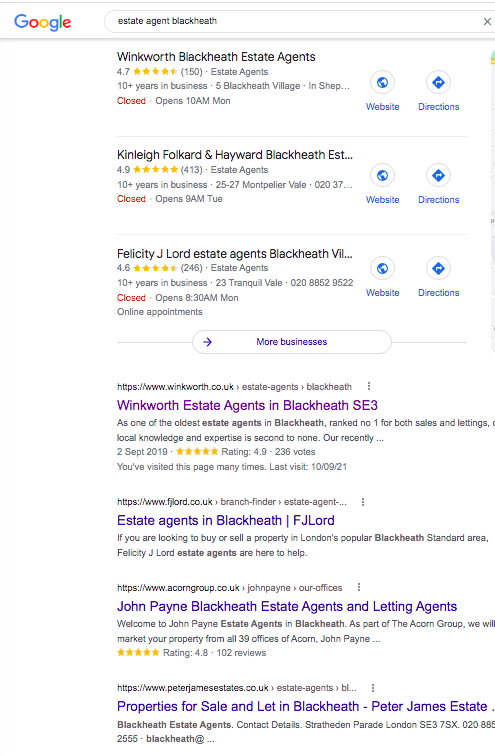
What you see above - a great Google score derived from a significant volume and flow of Google reviews and reviews on your own website that are owned by your business (not a review site) and then generating stars in natural local search drive business, there's no longer any argument about that. But how to achieve this...

  • without exposing your business to unfair, inaccurate or misleading reviews?
  • legally and in compliance with the CMA regaulations?
  • without disrupting your business?
  • without being sold the wrong solution?
  • for the long term?

Reviews - every business needs them - or so the sales forces of all the review sites and aggregators* would have us think. But this couldn't be more misleading. Let's see what almost every business in the world actually needs to get their review management spot-on, legally and to get the maximum benefit for the long term.

The following eight subheadings cover just about every critical aspect of review management a business needs to understand. Once you have read this article you have three options:

  1. Do nothing
  2. Follow the links to more detailed explanations and in-depth articles (there are more than a million words on this blog, written over more than ten years - it can be instructive to pick an old article at random to see if HelpHound was accurate in its predictions!)
  3. Contact us to see just how much value HelpHound can add for your business

*review site: the likes of Trustpilot, Yelp, Review.io and Feefo; review aggregator: the likes of reputation.com and Trustist. If your business is a client of any of these you need to pay special attention to the contents of this article.


Not yet engaged

It is completely understandable that many businesses have yet to find a safe and credible (not to mention compliant) way to engage with online reviews review management remains a minefield for the unwary (witness the massive monthly fees charged by some providers and the questionable credibility of many review platforms), but if your business has yet to adopt a formal review management strategy it is missing a huge opportunity to generate a significant and regular flow of inbound enquiries, both through Google and your own website.

The first question, therefore, you will be asking anyone pitching a reviews solution is 'How can we protect our hard-won reputation from...

  • fake reviews?
  • inaccurate reviews?
  • malicious reviews?
  • misleading reviews?'
The next question should be 'is your solution compliant with the CMA regulations?' And we suggest that you insist on having the answer to that one in writing, as very few are.

And only when you are completely satisfied with the answers to all of these should you even consider taking the next step into proactive review management.


Compliance

If your current reviews solution is not compliant then you need to seek advice - urgently. Non-compliance is against the law**, in the UK and EU at least. How will you know if your solution complies? Here's is a simple test...

  1. Do you pick and choose which customers to invite to post a review?
  2. Do you control the timing of the invitation to write a review?
  3. Do you use a customer survey or another review site - or any other mechanism - to establish who your 'happy' customers are before inviting them to write a review
  4. Do you use a system that allows you to defer/deny the publication of a review pending 'proof of purchase'  

If your business cannot answer 'No' to all of the above it is non-compliant, and liable to sanction by the CMA. 

Read this article; it contains everything you need to know about compliance with the CMA regulations and UK law.

**It is also blindingly obvious to even the least savvy competitor, and they won't hesitate to alert potential clients to the fact that 'XYZ may look great, but they flout the law to do so; would you want to do business with that kind of outfit?'


SEO

Hosting reviews on your own website encourages potential customers to make that crucial first contact and, vitally, contributes to your search engine optimisation score and therefore directly impacts your business's ranking in local search. If you don't currently rank in the top three (top five in densely populated areas) of local search you need to be consulting a review manager that allows you to host your own reviews on your website (not theirs).

There is also no doubt whatsoever that Google will, at some future date, further refine its review filter to produce ranked search results based on a business's Google score and the number of Google reviews it has and businesses that are not prepared will suffer. 


Proof

The number of businesses we meet that have adopted review solutions without first seeing concrete proof of their effectiveness is astonishing, to us anyway. Proof? Every business receives a Google My Business report once a month. In that report are the number of clicks and calls the business received through Google in the previous month. To understand the impact that effective review management has on any given business all that business has to do is monitor the uplift in the flow of enquiries through Google from before adoption through implementation and onwards.

Read this and see the audited results of properly implemented review management, and then read this 5-year-old article and bear in mind that all five of the clients quoted remain clients of HelpHound to this day (you might also conduct a local search on any of our clients to see the impact we have been able to have).


Moderation

Unmoderated review systems work for some businesses: retailers, online more so than high street; monopolies (or virtual monopolies) such as utilities. All other types of business that provide a service - or a significant element of service - in a competitive marketplace will invariably benefit massively from adopting moderated review management.

For the latter, a mechanism that prevents factually inaccurate and/or potentially misleading reviews from seeing the light of day, either on their own website or on Google, is not just 'nice to have' it is essential.

For more on this critical ingredient read this.


Own your reviews

We all now know that data is valuable in the modern technological age, so why give all your clients lovely data to a review site? The solution you use should enable you to retain all your client data and that includes their reviews. Only give it away when there is an overarching reason to do so - having their review copied to Google, for instance.


Take a long-term view

We know of at least one Plc that has changed review solutions over five times in the last ten years. By retaining control of all but the most essentially contracted out aspects of your review management (moderation is a good example of something that has to be done by an independent agency, otherwise all credibility would be lost) you will be well on the road to establishing a firm long-term review management strategy. 

Here are some pointers:

  • Your strategy must be Google-focussed: Google will still be here in ten years and, if anything, will be even more influential and credible than it is now. Your business needs Google reviews, not Trustpilot reviews, not Feefo reviews, not Yelp reviews (oops! Yelp has already shut down their UK and EU operations; just goes to show how the biggest of the review sites can be the most unreliable)
  • Your business needs to invest in adopting a proper API-driven review display system that doesn't jar with the rest of your site design and allows Google to 'see' all of its contents
  • Your staff need to be trained to understand that review management is not an add-on, but an integral part of your business's long-term marketing plan
  • Targets should be set for review flows and scores; few things look less professional or risk a slide down the search rankings than a business that has let this slip

Nothing to lose

It's intriguing just how dominant the wrong solutions have become in the last five years. The review sites, which are pretty much ideal if you are selling shirts or vacuum cleaners are currently making significant inroads into sectors where they are not only unsuited but indirectly positively harmful.

Suppose you had been sold a solution by one of these sites three years ago and had garnered 300 reviews there, and then read this? And realised that those 300 reviews could so easily have been on Google instead and owned by you on your own site, where they would be...
  • more visible
  • more credible 
  • more powerful
...and not just by a small margin. It is estimated that Google reviews are seen over six times more than reviews hosted on any review site and as for credibility...we leave that judgement to you (and your customers).

If you are at all unsure as to the viability of your business's current review strategy, just contact us. There's no obligation and we might just be able to set you on the road to the kind of success you see at the top of this article.