Wednesday, 25 May 2022

Six questions answered

To save you mining through this blog, here are the six questions we are asked the most, along with our answers...


1.  Why not just invite customers to write Google reviews direct?

You can. If your Google score is not critical then by all means do. But don't be surprised when you receive the odd factually inaccurate or potentially misleading review (see 'moderation' at 4. below). It is easy to see one's own Google score in isolation, but potential customers will always compare your score with competitors. Look at these two searches (the first is a 'simple' search and the second has used Google's popular 'Top-rated' function)...


That 0.1 or 0.2 is only gained by using a moderated solution (or, dare we say it, playing fast and loose with point 5. below), and moderation is only possible if you invite reviews to your own website using an independent mechanism that incorporates moderation (such as HelpHound). 

As a general rule-of-thumb...

    • if you sell products: inviting reviews direct to Google will do the trick as a score of 3.5 - 4.0 won't put many customers off
    • if you sell a service: (legal, financial or medical and the likes of recruitment and estate agency) a single inaccurate or misleading review can - and will - do untold damage, so you will need a moderated system


2.  Why do we need a moderated solution?

The answer to 1. above is only part of the story. Imagine you receive a factually inaccurate or potentially misleading review - on Google (all businesses do, sooner or later, and it's not an experience to relish). What can you do? Well, you could appeal to Google, but their criteria for removal are extremely narrow - and don't include errors of fact or misleading statements.

And, on top of that, what will be the impact of such a review? It can be really harmful to flows of enquiries. If you have any doubts as to that we suggest you read what happened to Summerfield Browne.

Moderation gives reviewers an opportunity - pre-publication - to correct errors of fact and/or potentially misleading statements. It is welcomed by reviewer and business alike. It also happens to be a great way to weed out 'fake' and malicious reviews - or even simply calm down a genuine reviewer who is 'over-egging the pudding' as so often happens.


3.  What's wrong with review sites?

They were the only option until Google placed reviews - their own reviews - front and centre of their offering. We have advised client businesses to focus on Google for over ten years now. If in any doubt find a business that boasts of its rating on a review site and then search for it and see what you see. The answer - 100% of the time - is Google reviews.


4.  Why is moderation so important?

As if we haven't said enough already. It's key to protecting both your business and your future customers from factually inaccurate or potentially misleading reviews. It removes the 'fear' that so many businesses feel when embarking on their review management journey - and it's the answer to compliance (5. below).

Factually inaccurate reviews and potentially misleading reviews: these categories of reviews have the capacity to prevent consumers even enquiring about your services. Here's more on this important subject.


The snag? You will have to invite and display reviews on your own website. But is that really a snag, given that your potential customers relish seeing them there?


5.  Why is compliance so important (all our competitors seem to be flouting the law)?

The CMA is on the warpath against businesses that flout its core rules...

  • No cherry picking (selecting 'happy' customers to write reviews)
  • No gating (pre-qualifying 'happy' customers using a survey or similar mechanism)
  • No controlling the timing of the review
And if that is not reason enough: if you do flout these rules - as many businesses still do - it will be as obvious as night follows day to your competitors. And you don't want them saying 'I know XYZ has great reviews, but they're breaking the law to look that good' do you?

6.  Can we be sure of making money from adopting review management?

For years our response had to be 'Why don't you try it and see?'. Not any more. Hard evidence is now available - monthly - from your Google my Business report. 


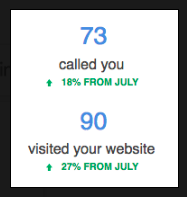
Every business gets a GMB report monthly. This one was sent to us by a client after their first full month of active membership. The figures in green are our focus.

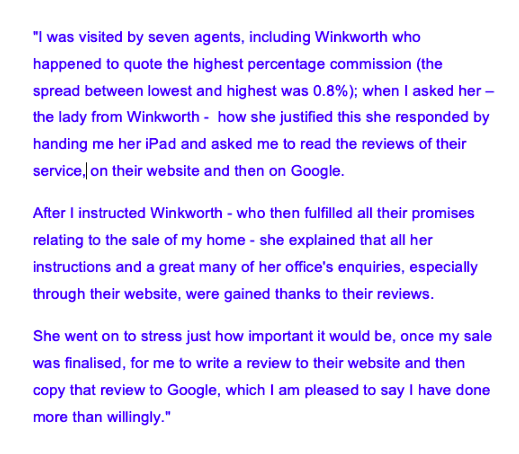
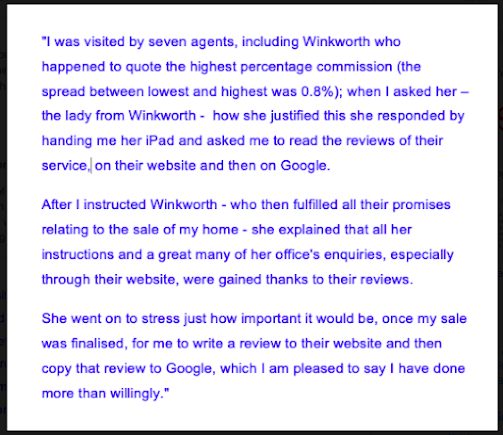
And this anecdote - from a client of a client of ours - really says it all...


If you have any more questions, don't hesitate to ask. Or you can interrogate the nearly 1,000 articles on this blog - but we'd far rather speak to you in person.


Friday, 20 May 2022

Don't shut out stakeholders

We sometimes come across review mechanisms that exclude stakeholders other than immediate 'verified' customers from writing a review. This is a bad idea - firstly because the regulators don't like it: the CMA clearly states that...


And they are unlikely to agree to a very narrow definition of those 'entitled' to write a review of a business as 'those invoiced for a product or service by the business'. And even less so those who the business sees fit to send an invitation to write a review. Look at the following examples of stakeholders and ask yourself 'if I were in their position would I consider it unfair that I were barred from writing a review of the business?'
  • A supplier to the business
  • An employee of the business
  • A past employee of the business 
  • The husband or wife of a person who had used the business
  • The legal representative of someone who had used the business 
  • Someone who had first-hand experience of a business but, for some reason, never became an invoiced customer

The list is endless. But there is a far more important reason why the business's review mechanism should be open in the truest sense of the word: open to all: if a stakeholder wishes to write a review but cannot for some reason associated with the business's in-house review mechanism they will find somewhere else that will accept their review. We have described this in previous articles, and even given it a name: Deflection. And the most obvious and popular alternative? Google - by far and away.

Look at this business...


A score of 4.8 out of 5 from 1361 reviews. But try clicking that button to leave a review. No, you cannot. You have to be invited to do so.

So what about Google - reviews that are hugely more visible to anyone searching the web and the gatekeepers of your online reputation?


Ouch! Millions, nay billions, of people reference Google reviews every day. If you drive people who don't fit your stringent criteria of a 'qualified reviewer' to Google the example you see above will highly likely be repeated for your business. And a large proportion of those who might otherwise have made it as far as your website and seen all your lovely reviews there will never do so.


The solution

We can hear some of you - quite understandably - saying 'Seriously? You wan't me to open my business to criticism by just any Tom, Dick or Harry?' 

No. we wouldn't recommend that - ever (unless you run a perfect business and also think every single consumer of the planet is perfect as well). As regular readers know - and our clients have proven, year in year out - the answer is to adopt a moderated review management system.

Moderation enables a business to open itself up to reviews from whatever quarter - all the time - in the secure knowledge that the individual moderators who read every review before publication will identify...

  • reviews that contain errors of fact
  • reviews that contain statements likely to mislead those who may rely on them
  • reviews that contain profanity or unwarranted accusations of law breaking
  • reviews written by competitors
  • reviews that are 'fake'

That's what we do for our clients. And it gets great results for great businesses, with reviews on their own websites and reviews to Google, safely and - most important of all - credibly.

Monday, 16 May 2022

A lesson for every business

This article appeared in today's Times:

Here's the full article

Don't worry if you cannot burrow through the Times' paywall, we'll highlight the salient points here.

Those of us that have lived and breathed online reviews for the last two decades find it intriguing that we are still encountering businesses in such volume that are making such fundamental errors when managing their interaction of reviews of all kinds. But there are - and they do. Hence this article.


Two key points straight away:  

Dreading the ping of review alerts

Sure. If the business has no proactive review strategy in place they'd be right to dread that ping. We looked at the Saracen's Head's Google reviews (after all, very few potential customers get past Google reviews if there are enough - we tend to define 'enough' as 100 minimum -  and the Saracen's head has plenty) and we can see that they are almost certainly asking customers for reviews - you don't generally get north of 300 and a score of 4.5+ without asking. 


So what are they not doing? They're not responding to reviews.

'Why respond?' we hear some of you ask. You respond because responding has three important effects:

    1. It shows potential customers reading the review (believe us, they will!) that the business cares.
    2. It allows the business the opportunity - for free - to address the issue(s) raised.
    3. It gives future reviewers pause before they 'over-egg' their complaint. If they know they will get a response they will either decide that their complaint is not important enough to write a review at all or that they will be more careful with their star rating (instead of simply plumping for 1*).

Please don't say 'We haven't the time' - we estimate a considered response to a review takes less than 5 minutes - surely worth the time for a business that 'dreads the ping of a negative review' and the 'immediate impact on team morale'.

Impact on team morale

Pete and his team should be - and undoubtedly are - proud of the service they provide to their customers, across all four of their venues. But Pete is also right to highlight the impact a negative review can have on staff morale. 

The opposite is also true: staff positively glow when they see a 5* review (businesses that have no proactive review management strategy please note). Get reviews flowing* and your staff will thank you.

*all research proves that companies that ask for reviews score considerably higher than those that don't. This is not rocket science: happy customers rarely write a review unless asked while unhappy customers are far more likely to, so asking customers to write review works!


Just in case any readers still doubt that reviews have impact. There's also a case history here where a single negative review literally stopped the phones ringing at a firm of solicitors. They took the reviewer to court - something we would strongly advise against - but were able to prove to the judge, and therefore the world - that the review had cost them a quantifiable amount of money. Pete Dale's restaurants have few negative reviews, but he would far rather there were none, for good financial reasons.


Fake reviews and regulation


The fact that businesses - some businesses - are willing to pay for fake reviews shows just how powerful reviews and review scores are. Why would a business resort to such behaviour? We can hear readers saying 'My business would never do that' but we have a file full of examples - and you might be surprised at some of the names. Why do otherwise respectable and law-abiding businesses break the law?

Best define 'the law' first:

1.  By law, if a business invites any customers at all to write reviews, anywhere at all, it must allow all of its customers to write a review. It cannot choose which customers to allow to write a review.

2.  Nor can it control the timing. Using a system that only allows customers to write a review when asked to do so by the business is illegal.

3.  Using any mechanism to establish which customers will be most likely to write a positive review is also illegal. Examples include using an email customer satisfaction questionnaire or a less visible review site (we see examples of companies using review sites to gather reviews and then only inviting those who rate them five stars to post a review to Google - if we can see them, so can the regulators - the CMA in the UK).

4.  Buying, or in any way encouraging 'fake' reviews is now illegal in the UK. That includes asking 'friends and family' or others that have not directly experienced the product or service the business is selling to write reviews. It is also against Google Terms of Service; Google will delete all the reviews of any business found doing this.

Businesses are, quite understandably, very wary of reviews; they know that good reviews will drive business but they also know that negative reviews can harm business. That's why - in a nutshell, that a huge number of businesses flout one or more of the laws above. So what are businesses to do, given that...


The next business referenced in the Times article is The CheeseGeek...


Now we fully appreciate that one man's 'torrent' is another's trickle, so let's look at the numbers (on Google* - because that's the place most of their potential customers will be looking):

                  • 5 star: 37
                  • 4 star: 1
                  • 3 star: 1
                  • 2 star: 1
                  • 1 star: 16
*The issue here is one of misdirected resources: the CheeseGeek has over a thousand reviews on their website, almost all of them complimentary, but they have failed to realise that the place they need to be inviting customers to review them is on Google. If only ten percent of those customers who had left a review on their website went on to copy it to Google then their score would be safely nudging 4.5.


And this doesn't only apply to restaurants and online retail, far from it, it is far more important that professional and service businesses in the medical, financial, legal and related spheres look impeccable in search.


Here's a four step plan...

1.  Invite reviews on your website - like this...


2.  Have those reviews moderated before they're published

Moderation is the act of reading the review - it's done by a real human being, not a bot - before it's published to ensure that it is, as far as practically possible...

  • factually accurate (no one benefits from reading factually inaccurate reviews, not the business, not the consumer reading - and relying on - the review, and certainly not the reviewer)
  • it contains nothing that may have the potential to mislead the reader
  • personal abuse or anything of an illegal nature (you might be surprised...)
This is probably the single most important function we perform. As you can imagine, it's impossible for a business to moderate its own reviews - all credibility would be lost; moderation takes 99 percent of the fear out of reviews - because that fear is generated by the contents of the three bullet points above.

3. Get as many of them across to Google as you can

  • we suggest a target of one in two, because we know it's achievable. If you look at the example above, Winkworth Blackheath have 241 reviews on their own site and152 reviews on Google...


4. Respond to them all - see above.


In summary

If you have read this article you will know 90% of what any business needs to know to succeed with reviews. The other 10% is contained in this blog and consists or advice, for instance, to focus all you efforts on Google reviews and to avoid review websites at all costs. Just use the box above to interrogate the blog or, even simpler, pick up the phone and dial 020-7100 2233 and ask to speak to one of us.


Friday, 13 May 2022

Trustpilot - and again!


And here's the business in question's listing on Trustpilot - today...


Now, are we the only people that think that if you have cause to think - enough cause to initiate legal action - that if the company in question is playing fast and loose with your review platform its listing should be suspended altogether?

This business is suspected of gaming its reviews, so what does Trustpilot do - aside from (apparently) sue it?
  • It leaves 111 of its reviews up on the site
  • It maintains the business's rating at 'Excellent'
  • It continues to prominently display the business's 5* Trustpilot rating
Euro Resales also does well on Reviews.io...


And Yell...


But, interestingly has achieved the near impossible with Google - no reviews and no knowledge panel at all...


This is what 2.2 million UK businesses look like in Google search...


So, why no knowledge panel (the box on the right) and no reviews, let alone a 'Write a review' button (bottom right)? A business would normally have to adopt some pretty strenuous reverse SEO to achieve that ('reverse SEO' being defined as 'extra effort to be invisible to Google').

In conclusion

Regular readers will not be surprised that we have question marks over Trustpilot's action - again. There is no reason for any business to prefer Trustpilot reviews over Google's (which are free) - except that Trustpilot appears to be quite helpful in making it tiresome for consumers to get negative reviews of businesses published (see below). We know that the CMA have issues surrounding this, we just wish they would act.


Further reading

Tuesday, 3 May 2022

Trustpilot - again?


Here's the full article in the Investor's Chronicle. Madeleine Taylor at the IC has hit the nail on the head, but there's more to Trustpilot's woes than just consumer trust in the platform.


Forgive us! But as a review platform that prides itself on the integrity of the reviews it hosts for our clients, believing that the veracity of a business's reviews is a direct reflection of the business's own ethics, it is essential that we return - again - to the subject of Trustpilot and the inherent weaknesses in its business model.


Too far, too fast

Wouldn't it be great if someone could design some software and an algorithm that would invite, host and display reviews of any given business without human involvement?

That's effectively what Trustpilot has attempted to do. And here are some of the reasons why it has failed...

  • fake reviews: these are the headline-grabbers. A quick web search will throw up a multitude of individuals and businesses - mostly offshore - that will write 'reviews' for a fee. Until recently you could even buy reviews on eBay. Only a trained moderator stands a chance of spotting a fake review.
  • fraudulent reviews: many businesses, realising the harm a single negative review can do, will panic and write their own reviews. We have on file an example of a London estate agent where its branch managers all agreed to write reviews of their neighbouring branches. Again, only a skilled moderator will spot this kind of activity.
  • irrelevant reviews: when you are looking for reviews of a product then the odd review mentioning the efficiency of the delivery company may be helpful, but dozens?
  • factually inaccurate reviews: consumers rely on reviews (recent surveys estimate over 90% of purchases are made after reading them). Before any reader thinks 'but we all take them with a pinch of salt' imagine relying on an inaccurate or fraudulent review when choosing a financial adviser or an oncologist.
  • potentially misleading reviews: reviewers get the wrong end of the stick, all businesses know that, but if there is a method of ensuring that the absolute minimum of misleading reviews see the light of day then surely everyone benefits? It's called moderation and it works.
  • language: no computer can come close to understanding colloquial written English (or any other language). No-one but a human moderator will be able to ensure that reviews are accurate and helpful for those reading them. Even then the moderator may need to contact the reviewer to establish exactly what they meant. 
  • sales-driven: when you have institutional and private equity shareholders breathing down your neck and needing profits for their investors - now! - it is almost understandable that you are going to design a 'product' that is as easy as possible to sell. And as 'user-friendly' to the businesses you are going to be selling to as possible. While there is no argument that a business that is proactive with regard to reviews will attract more positive reviews (and therefore a higher score) it is important that the business is advised to do so in the arena that will benefit the business most. That arena is Google, not Trustpilot.
  • trumped by Google: Google does everything Trustpilot does, and more - and for free! Product reviews? Yes. Business reviews? Yes. Service reviews? Yes. Some might argue that Trustpilot's reporting/dashboard is superior, but at what cost in terms of £$ and in lost profile (see below)?
  • lack of visibility: Trustpilot reviews are only returned low down in organic search, while Google reviews are returned at the head of every search, every time. No contest.


A note on moderation...

Moderation - the act of a human being reading a review, pre-publication, to ensure, as far as is reasonably possible, that the contents of the review are factually accurate and not likely to mislead a consumer, is expensive. It cannot be done by a computer, however sophisticated, and therefore salaries have to be paid. 

Luckily Google reviews are free, leaving businesses with only one expense providing they don't engage another review provider: moderation. When moderation is combined with software that enables the business to invite reviews to its own website (and display them there) then on to Google, as it is in the case of HelpHound, then the business has the best of both worlds:
  • moderated reviews showing on Google


and...

  • those same reviews* showing on their own website...


as well as...
  • leading local search...


The reviews and star rating in the Google Maps 3-pack are the business's Google reviews, the reviews and star rating in organic search are taken, by Google, direct from the reviews on the business's own website.

*some of you will have spotted that the business in question has more reviews on its own website (241) than it does on Google (152). That is because every person who writes a review to the business's website (allowing us to moderate it) then receives an automated invitation to copy their review to Google. For all kinds of reasons - missed the email, couldn't be bothered, concern about privacy - not everyone will do so. But, as you can see in this example, quite enough have.


It's not just us!

If all you did was read the HelpHound blog you might get the impression that we have a bit of a one-man crusade against Trustpilot. One glance at the chart that follows will show that we are not alone...


And finally: our advice...

If your business sells products: get the Google widget, embed it in your website and invite customers to review you there. You will get the odd 'random' review but not so many that you need moderation. It won't cost you a penny.

If your business sells a service/services, be that financial, medical, legal or any other (such as the estate agents above): adopt a moderated solution to ensure that reviews don't do it unfair harm. It will almost certainly cost you less than a Trustpilot subscription but your reviews will be credible and visible in the right places: on your website and on Google/in Google searches.


Further reading...


Wednesday, 30 March 2022

HelpHound - why it is the only option for professional businesses

In spite of our fifteen+ years of experience working - full time - with reviews, our exhaustive knowledge of Google and the likes of Trustpilot, Yelp, Feefo, Reviews.io, TripAdvisor, Reputation.com and the rest, and - even more puzzling - the amazing case histories (link in the first paragraph of 'Do reviews drive revenue?' below) we still, frequently enough to have us write this article, encounter responses along the lines of 'No, we are doing [insert current ineffective or often downright illegal strategy] and we're going to stick with it.'

We know it's only human to be defensive when you have invested time, energy and resources into a solution, even if that solution can be proven to be deficient (remember just how many people persisted in buying Vauxhalls or Lancias back in the day when the whole world - from friends to the motoring press - was telling them, time and again, that they would be driving a worthless rust-bucket in a few years' time?).

The role of this article is to calmly work through the solutions that don't work or are likely to endanger a business's reputation - or are just plain illegal, so you can make a rational and reasoned decision for your business.


First: do reviews drive revenue?

If you have already experienced the power of positive reviews to drive up clicks and calls then skip this section and begin again at 'Benefits are measurable'. 

With well over 90% of consumers consulting reviews before they purchase a product or service, reviews - and professional review management - are not a 'cost'. They are most definitely a profit-generator - for those businesses that are prepared to put in the effort and overcome the 'fear'. 

A business scoring over 4.5 on Google with over 100 reviews will attract more clicks and calls than a business scoring less with fewer reviews. Read these case histories and you will see exactly what we mean. Great reviews and great scores lead directly to...

  • increases in enquiries, both through a business's website (providing reviews are hosted and shown there) and through Google. This can easily be quantified by reference to the business's Google My Business monthly report which will show you the uplift in clicks and phone calls through Google search. 
  • greatly enhanced SEO: we are constantly asked 'How does XYZ HelpHound client consistently appear at or near the top in any given Google search?' The answer is complex and shrouded in mystery (it's Google's 'Coke formula'), but Google tells us that it gives significant SEO credit to businesses that host reviews - proper reviews, not testimonials - on their own websites.


Benefits that are measurable

Cost - as we all know - is only relevant when viewed in the context of benefit. Fortunately, Google sends every business on the planet a monthly report that tells it exactly how many enquiries - click-throughs and phone calls - it has had as a result of Google searches in the last month. Again, here's a complete article on results here, but this screenshot of a business's uplift in both clicks and calls after joining HelpHound really says it all...


18 per cent more calls and 27% more clicks for less than £200 a month (much less if you have multiple branches)? 


Now on to the various solutions available to businesses...

Google - direct

Great. Spot on. Google reviews are it. Way ahead of anyone else's. Unless your business is vulnerable to the occasional inaccurate or misleading review. The business world is divided into three categories...

  • those that are impervious to online reviews: the likes of your mobile phone provider, utility companies or banks. They'll carry on trading irrespective. Here's an example we all know of...


Ticketmaster is just about as impervious to negative reviews as a business could be 

  • those where the business - often selling products as opposed to services - recognises that it needs to score 4 out of 5, but that's enough. Online retail is a good example: if someone is buying a shirt and it scores 4 out or 5 they will still buy it. Less than 4 and they will probably look for a better rated product.


Boden will no doubt shrug at a score of 3.0 on Trustpilot. A similar score for a doctor or a solicitor on Google would almost certainly close them down, from the point-of-view of search-generated business anyway

  • Professional services, where consumers are looking for as close to perfection as is reasonable. We know, from hard experience over many years, that a Google score of over 4.5 is crucial for the likes of medical, financial, legal or 'large ticket' services - estate agency being another obvious example. Please read the following review carefully...


This law firm had enough evidence to convince a judge to make a five-figure damages award as a result of the impact of this single negative review. 

And their image on Google must be doing them significant harm as well...


Just look at this single critical review on Google:


And now note just how many people have voted it 'helpful'


Note for those still thinking 'negative reviews can't harm my business': The five figure award was made because the firm of solicitors were able to provide concrete proof of declines in both telephone enquiries and clicks though to their website subsequent to the publication of the critical review on Trustpilot sufficient to convince a judge sitting in an English court of the fall in revenue it had experienced. Given that Trustpilot reviews are only visible to those actively searching for them and Google reviews are seen by just about anyone searching for the business in question we don't feel that we are exaggerating in saying that a negative review on Goggle is going to do at least ten times the damage that a similar review on Trustpilot has been proven - to a court's satisfaction - to have been done here. The full story is here.


Businesses in the last category - professional and services -  need to combine Google reviews with a moderated system whereby the client or patient is first invited to post the review to the business's own website, where it can be checked for factual inaccuracies or the potential to mislead pre-publication; only then is the reviewer asked to copy their review to Google. It is also nice to know that this helps with SEO and ranking in local search. 

Breaking the law

This is the biggie: most businesses don't understand the UK law as it relates and applies to reviews and those that do misunderstand the consequences of breaching it.

The law

Is quite straightforward: the following three actions are expressly forbidden...

    • selectively inviting customers to write a review. Any business proactively inviting reviews must be able to prove that any customer is able to write a review at any time of their choosing
    • showing selected reviews on the business's website
    • 'gating': using a mechanism - which might be a 'customer survey' or another less visible review site - to establish which customers are most likely to write a positive review and then inviting only those to do so

        The consequences

    • the less obvious, but potentially just as harmful: the fact that any of the three illegal activities listed above will be obvious to any savvy competitor; they are then almost certain to use that information in competitive pitches 'Yes, their reviews are wonderful aren't they? But we're bound to tell you they are that way because they are illegally acquired/filtered. Do you really want to be dealing with a business that flouts the law?'
    • and in the case of gating: this is expressly against Google's Terms of Service as well. Google will simply delete all the reviews of any business it considers to be gating. And there will be no appeal


Review sites


The fact that Trustpilot's share price is now over 70 percent down from its peak of 449p in only six months (against a market that has risen 6%) shows just what investment professionals think of its prospects. By deflecting client businesses' efforts away from Google it is doing them a long-term disservice.

This article was published here on our blog four years ago. And it wasn't the first time we warned businesses against using, let alone paying for, a review site. The review site gets all your lovely client data in exchange for what? Giving you a star rating that's far less credible or influential than a free Google one.

Yet we see them everywhere. How so? Simply because they predate Google reviews (there would have been no review sites if Google hadn't been so late to see the power of reviews). Also: they have salesforces who are trained to maximise the wafer-thin benefits of these sites and minimise the power of Google reviews. But just perform any simple search - on your own business or any other - and what do you see?

Google reviews. End of.

So: if your business falls into the first two categories you just need a Google widget on your website and then invite customers to post directly to Google.

If you are a professional or service business you will need a moderated but Google-focussed system that gets reviews - your own - to your own website and then get as many as possible of those across to Google. Like this...


240 here, then...


...151 to Google (note the extracts appearing in the Google rich snippets at bottom right and the original reviews hosted on their own website showing alongside their organic listing at top left). Then the all important local search...


...where they lead both the Google 3-pack and natural (organic) search.  

Review aggregators

What a great idea. What could possibly go wrong? For clarity, review aggregators scour the web for any reviews of your business and then present them on your website for potential customers to see. Fine, until you realise that there's no safety net. No way of moderating what is being written or said before it's published front and centre. That's fine if you are an online retailer and people are looking for you to score 4 out of 5 before they order your shirts or socks (one review site was even founded by such a business) but potentially hugely damaging for a professional business providing easily misunderstood complex services to clients or patients.


We wonder just how long before this one-star review - fed through by an aggregator - was noticed by the business? All we do know is the business in question is no longer using the aggregator.

And another...


We stress that both these screenshots were taken from the front page of each business's own website. And guess what? They're no longer there. Review aggregators don't work for high value and/or complex service and professional businesses.


Time and human resources

When we speak to our clients they tell us that once they have embedded review management into their daily routines they simply don't notice the time taken to look as good as they do. Most mention the fact that they find the exercise hugely rewarding from a management and staff morale point-of-view. And when they have experiences such as this...


...any thought of time or effort vanishes into thin air.


In conclusion...

If your business falls into any of the following categories:

  1. Yet to actively engage with online reviews - from fear of the consequences or just because you have been meaning to but just haven't got around to it.
  2. Engaged in the past but had a negative experience - a harmful review on Google or any other site, for example.
  3. Already inviting clients* to post direct to Google but are aware of the risks that this entails.
  4. Already inviting clients* to post to a review site, but concerned that you may be missing out on the power and credibility of Google reviews.
  5. Cherry-picking or gating - sometimes euphemistically called 'selecting' and 'pre-qualifying' but nonetheless illegal - to ensure your online reputation is protected (don't worry, you're not the only ones, but you will sleep a whole lot easier once you have adopted a legally compliant solution).
You owe it to yourself and your business to, at the very least, take the first step in the direction of a professionally managed review system; call us and we'll talk you through all the implications for your business** and answer all your questions


*Note 1: we use the term 'clients' here advisedly. If your business has 'customers' and you sell those customers 'products' - as opposed to some kind of service, be it financial, medical or legal (or a hybrid of those such as estate agency or recruitment) - we will still be able to add value, but HelpHound was specifically designed to enable professional and service businesses to enage - compliantly - with reviews.

**Note 2: each business is different, and therefore each solution must be tailored. Review sites tend to operate on a 'one widget suits all' basis. They also tend to be 'sales heavy' and light on ongoing customer service: something that we at HelpHound pride ourselves on.

Our objective is to only have clients where we can add value - right to their bottom lines - so we have no incentive at all to take on a business where we are unable to do that.