Wednesday, 16 February 2022

Why not Google?

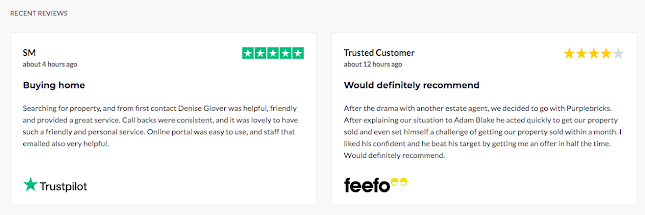
 Here is a well-known and much-marketed national brand, on its own website:


Now, given that we all know that Google reviews are:

  • more visible - in all searches
  • more viewed by consumers
  • more credible - at least Google knows the online activity of the reviewer
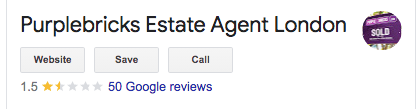
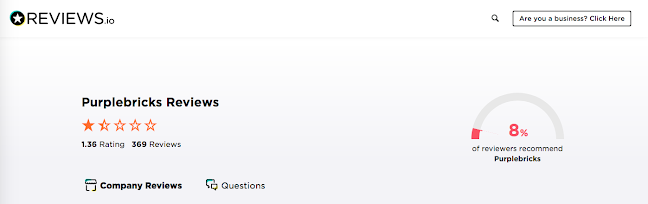
Why are they not promoting their Google reviews? Maybe the answer is here, in searches on their HQ...


...and London:


And here, with the second organic result when a potential customer searches for 'Purplebricks reviews':


Ouch! Three times ouch!

Now, we are not commenting on the effectiveness of the business. We've never used them. But we are commenting on the effectiveness of their review management strategy; it is misguided.

Why?

At the very least, employing not one but two review sites - why two, we have been asking ourselves and our readers for years? - has led unhappy customers to ignore the business's chosen channels and write their reviews to Google (and another review site). This is a well-known habit we christened 'deflection' (this article was written over 5 years ago).

Lessons for them - and everyone else

First and foremost: a business's review strategy should be based on and built around Google reviews, not any of the independent sites.

Next, if you run a complex service business such as an estate agency - or a financial, medical or legal practice, where your good reputation is a vital plank of your marketing* - you need an independently moderated system. This will ensure the bare minimum of inaccurate, misleading or just plain unfair reviews see the light of day.

Having accepted those two basic ingredients you will need to find someone like HelpHound so you can host your own reviews on your own website and have them moderated and as many as possible copied across to Google.

Back to the original question: why have Purplebricks not adopted such a strategy? We haven't the faintest idea. Please comment if you have.


The City knows what it's doing

Not always. But in this case it looks as if it does:


* 'Isn't every business's online reputation important?', we hear you ask, quite sensibly. Well no. High Street retail and quasi-monopoly businesses such as utilities will trade quite happily while their customers rate them 1* online. Think Starbucks or Vodafone. Definitively not the case for a solicitor or a gynaecologist - they have to look the best they possibly can; if you have any doubts at all please read this horrifying case history.


Friday, 11 February 2022

Reviews drive revenue

It's that simple: when a business gets its review management right it should expect it to pay significant financial dividends (more below).  But there are four key rules that all businesses need to follow if reviews are to drive revenue without compromising the business's legal integrity and its ultimate long-term reputation. They're all straightforward, but 'break' one of the four and your review management will ultimately* fail.

*Ultimately: far too many businesses have either taken a short-term view on Google reviews - get as many as possible, all positive, irrespective of the law - or they have been sold a solution that will ultimately result in harm to their brand, often by diverting reviews away from Google to a review site, where their reviews are increasingly invisible to their prospective customers. 

Marketers need to be planning at least a decade ahead where review management is concerned and should be able to answer the question 'Where do we want to be with regard to reviews and what impression do we want to be creating in 3, 5, 7 and 10 years time?' with confidence.


Rule 1

Obey the law. 


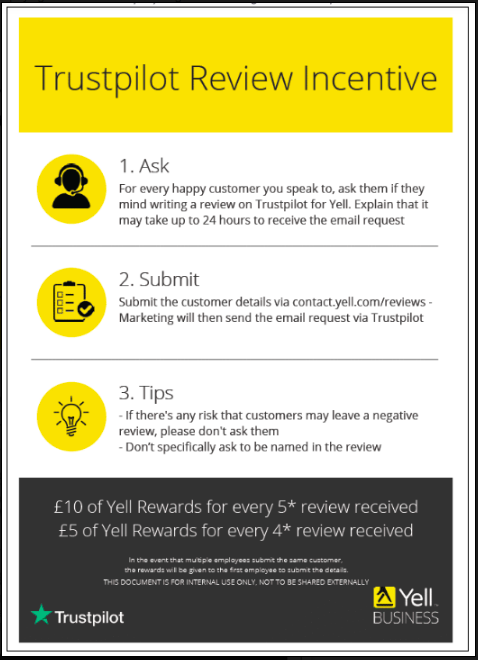
It is rare to come across such hard evidence as Points 1. and 3. on this Trustpilot/Yell notice to staff, But we estimate that well over 50% of businesses have some such demonstrably illegal scheme in place, whether focussed on Google or a review site (or both).  The CMA has powers to confiscate computer equipment and email records, and it will use them. And if you knew a competitor was doing this?


Very few businesses currently do - obey the law, that is. There's a simple test: if a business does any of the following...
    1. Invites selected customers to write reviews
    2. Controls the timing of the review
    3. Rewards staff for attracting positive reviews
    4. Rewards customers for posting reviews
    5. In any other way 'filters' customers to eliminate those less likely to write a favourable review

...then the business is not compliant with the CMA rules or UK law.

In addition, if the business pre-qualifies those it wishes to invite to post a review to Google, a practice known as gating, it will be in breach of Google's terms of business (customer surveys are a popular mechanism here). If found to be doing so by Google the business will have all its Google reviews deleted without recourse to appeal.

The single most frequent reason given for this non-compliance is 'but our competitors do the same.'  No defence, obviously.


So: in order to obey the law and be confident of protecting its hard-won reputation a businesses must find a solution that allows all of their customers and other stakeholders* to write a review direct to it rather than straight to Google. It must then publish all those reviews on its own website (having had them moderated - see Rule 2 below), and then have as many of those as is practicably possible copied by the reviewer across to Google.

*other stakeholders: it is a common misconception to assume only paying customers will write a review to Google; we estimate that up to 20% of negative reviews are written by people where the experience they are reporting happened before any financial transaction took place, (think of the disappointed potential tenant or failed purchaser of a property - or the classic example of the prospective patient frustrated by their dealings with the doctor's receptionist). It is important that businesses give such people a route to vent their dissatisfaction before they resort to Google.


Rule 2

Adopt a moderated solution. 


 This single review, on a review site with far less visibility than Google reviews, caused enquiries to the business in question - a firm of solicitors - to drop by over 40% overnight. Here's a link to the full case history including the judge's summary of findings in the subsequent court case and an analysis of the financial impact on the business which led to the award of damages


We often meet businesses that are sanguine about the possibility of attracting damaging negative reviews, until they actually receive one. Moderation cannot eliminate inaccurate, misleading or even plain fake reviews but it will go a long way - as far as is possible in today's review and compliance environment - in doing so. If you ask any one of our clients about their experience with review management they will invariably rank moderation in the top two advantages, alongside the positive impact on revenue flows that is the object of this article (see below). Moderation eliminates the fear of the negative consequences of compliance.

So: be aware that a single well-written but factually inaccurate or potentially misleading review can do significant harm to business flows. Far better allow dissatisfied or disgruntled customers to post a review to your own website where it will be subject to moderation than simply hope they won't post direct to Google.


Rule 3

Host your own reviews on your own site. 

Yours, not Google's or any other review site's. Why? Because by inviting reviews to your own site you will achieve the following...

    • you will be able to have them independently moderated pre-publication. It's the only way to prevent factually inaccurate and/or misleading reviews appearing there and on Google
    • You will be giving potential customers who visit your site, and may have missed or bypassed your glowing reviews on Google, a reassuring point-of-reference that almost all savvy consumers actively seek out these days
    • You will own your own reviews: they are a valuable asset and you should not be giving that asset away unless the circumstances are exceptional - getting the reviews across to Google qualifies as 'exceptional'; having reviews on a site like Yelp, Trustpilot or Feefo does not

So: Allow customers to post reviews direct to your own website; then have them independently moderated and invite the reviewer to copy the review to Google (HelpHound's software sends this invitation automatically).


Rule 4

Embed that solution throughout the business and all its processes.

Review management needs to become part and parcel of the daily routine of your business, alongside all your other sales and marketing practices and CRM. 

Review management is no longer a 'nice to have' add-on. It has to be core. Ask the key question: do we want to be the first of our competitors to see the benefits of professional review management or the last? Engage all management and staff and ensure review flows, to both your own website and Google, are constant and consistent. Invite reviews on your website, invite reviews by email, tell customers in face-to-face contacts that they will be invited to write a review.

So: test it; proof of concept is a challenge we relish. Any respectable solution won't tie your business in or cost a fortune (HelpHound has no contract periods - and a client once said 'it's a round of coffees on the last Friday of the month' which is an apt a cost analogy as any). Use all the resources and experience a service* like HelpHound can provide to maximise results. And monitor those results carefully - through your monthly Google My Business report, website metrics and staff feedback.

*service: most review solutions are purely software driven: the sales person is the last point of human contact; at HelpHound the sale is just the beginning of our contact with your business. Our most successful clients are often those that pick up the phone to us the most.


Driving revenue

If you obey these four rules your review management will not only become immediately compliant with UK law, it will have a rapid and sustained impact upon your inbound enquiries, through Google search and through your own website...


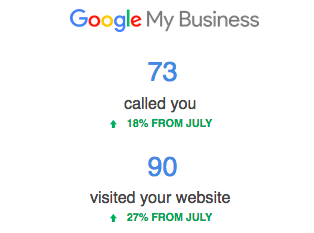
Just one example of a company's Google My Business report from the month after full implementation: we have seen these numbers - the percentage rises in calls and website visits - go as high as three figures


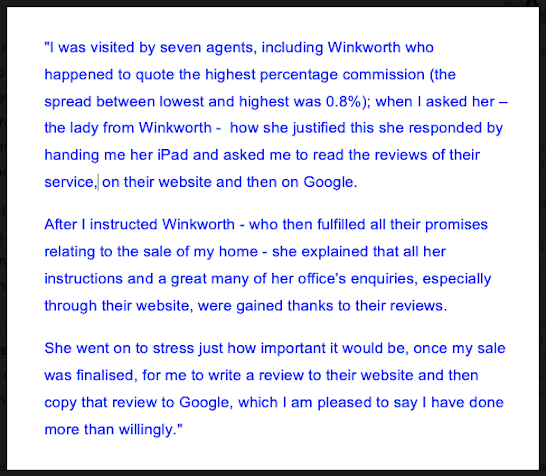
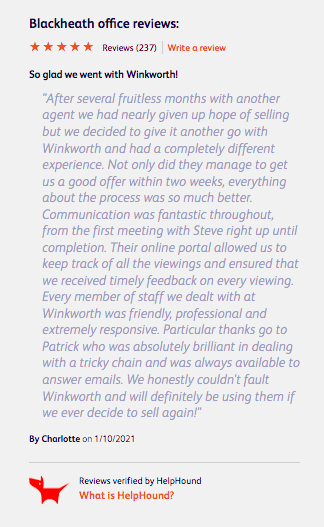
...and will then go a long way to providing the kind of support described by this customer when acting as an aid to conversion in the sales environment:


In summary


Your business has nothing to lose, and everything to gain from partnering with HelpHound...
    • more leads through Google - quantifiably
    • more leads through your own website - quantifiably
    • enhanced SEO - Google gives you credit in local search rankings for hosting reviews
    • the reassurance of employing a moderated solution
    • the reassurance of employing a compliant solution
    • excellent support in the close - from both your score and individual reviews
    • a constant flow of wonderful marketing and PR material
    • a boost for staff morale
...all with no contract period.


Further reading

  • Review denial: not yet engaged - or even consciously decided against engaging with reviews? This is a must-read article
  • Going it alone - inviting reviews to Google: why this is a high-risk long-term strategy
  • Review sites: the likes of Yelp, Trustpilot and Feefo have now been overtaken by moderated Google review solutions: far more visibility, more credibility and with a far longer shelf life. It's also now recognised as best practice to own your own reviews - don't give them, and their value, away to a review site
  • Results: expanding upon the 'Driving revenue' section above
  • Benefits: a post from which this article was distilled, including screenshots of client websites and Google searches
  • Index for 2022: this blog, running as it does for over ten years, contains nearly 1,000 articles - it can be interesting to jump back five years or more to see if our advice then was correct! -  but the articles in this index are the ones that potential clients will benefit from reading the most

Wednesday, 2 February 2022

Google Guaranteed - a contradiction?


Our reaction? Simply put: then just about any business at all! Before we go on to give you a real-life example of the kind of business that scores 3.0 perhaps we should remind everyone that a consumer cannot score a business 'no stars' on Google. So, even if they consider they were robbed blind they still have to score the business one star if they are to write a review. 

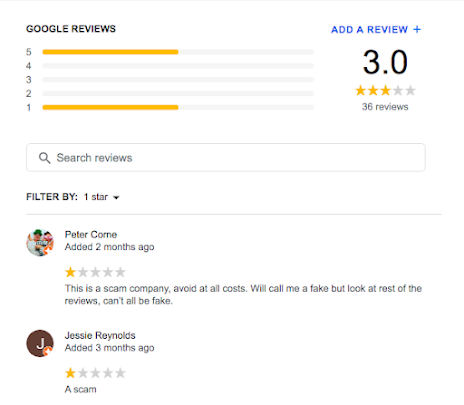
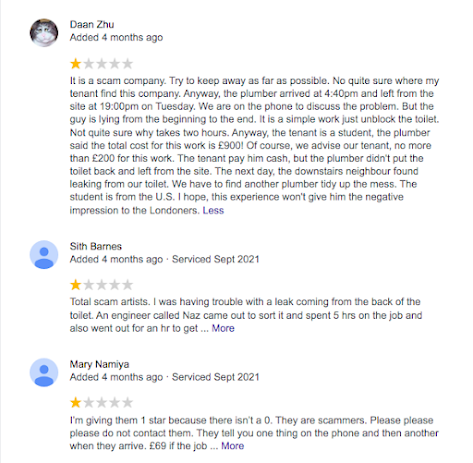
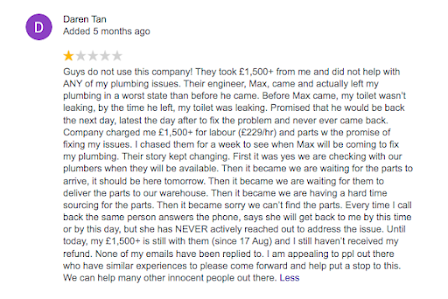
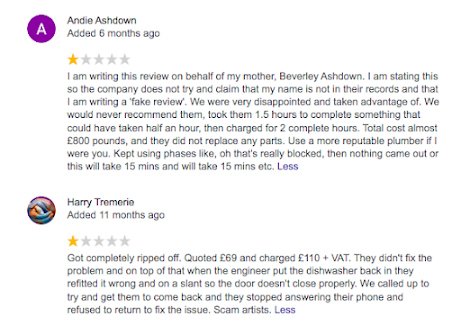
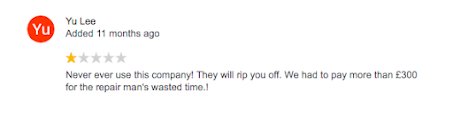
This means, mathematically speaking, that a business such as the one below scoring 3.0 from 36 reviews has 18 one-star reviews which still contribute eighteen 'points' to their overall review score. So what does a three-star business look like? Well, here are some of a 3-star plumber's one-star reviews (in fact: all of those that show on its Google Local Ads listing, where the other nine are we don't know - we only know they exist because the bar chart below shows half of the 36 reviews scoring 1*)...


And here's their shiny green Google Guaranteed tick...


The big question - and one that we have as yet been unable to unearth the answer to, despite many hours of searching - is 'Just how many Google Guaranteed claims have Google paid out on?'

Here, from Google's own website, are the terms of the Guarantee.


Our concern is that Google users will take the Guarantee at face value: that the work performed by the business will be guaranteed, albeit up to a ceiling of £1500, and, more importantly, that the Guarantee implies a certain level of expertise on behalf of the business and its employees/agents. 

Businesses such as the one above have certainly adopted it - at a cost of £500 a year and c. £25 a lead - with alacrity.

We will continue to monitor this with interest. Meanwhile, our advice to businesses is to keep on inviting reviews to your own websites, get them moderated there and then as many as possible onwards to Google, whether you choose to subscribe to Google Local Ads and the Guarantee or not.

Monday, 31 January 2022

Google Local Ads and the Google Guarantee - a moneyspinner for Google and the death knell for review sites?

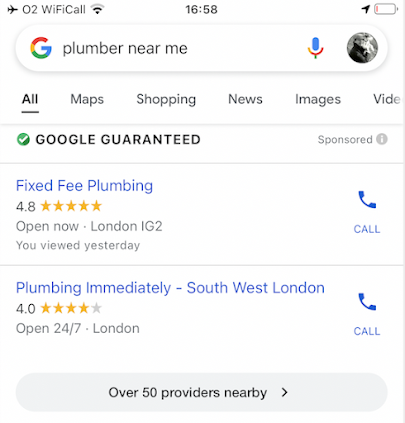
Anyone who has conducted a local search recently will have seen Google's clever new offering: here's a common enough example:


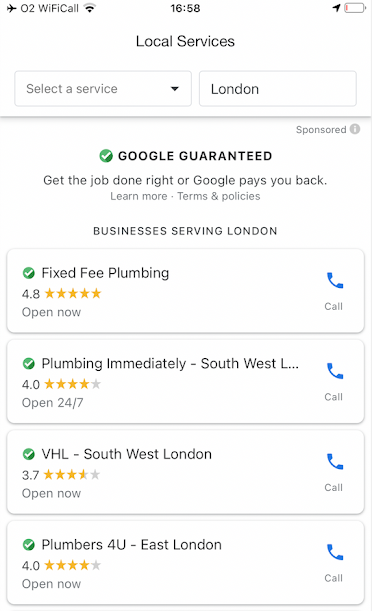
With the tab at the bottom leading to...


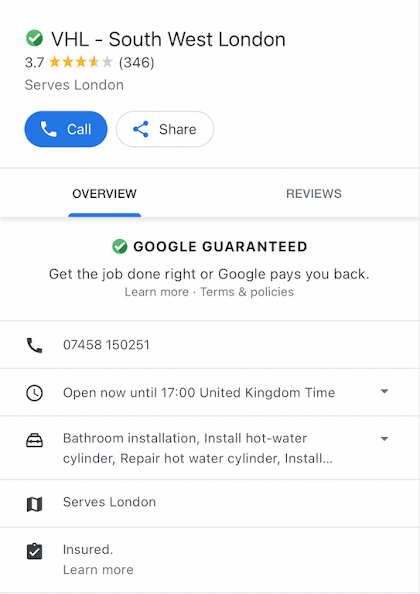
With the green tick that means 'Google Guaranteed'...


Although the 'guarantee' provided by Google certainly doesn't relate to the quality of the workmanship or service on offer, if some of the reviews for the Google Guaranteed businesses are anything to go by...


...these go on for a long way

The basic premise is to be found here, but to summarise: the green tick means the business actually exists plus a few other knobs and whistles (we're disappointed they will accept businesses with only a mobile number), which we suppose is a step in the right direction when you think of some of the 'businesses' doing the rounds offering their services from the back of a white van.

But there are two serious issues at play here.

First, why, if Google reviews worked and businesses engaged with them in a legally compliant manner, is this service needed? Who needs it? Consumers? Why not just search for a plumber with a decent score and a good number of reviews? Google is charging businesses for that green tick and for the ability to appear right at the top of search, above ads, above the 3-pack and above organic listings. Isn't that why Yelp quit the UK and the EU? Didn't the authorities have issues with businesses paying to be bumped up the search rankings?

Second: that's it for the likes of Trustpilot. Why would any business pay for them when they can pay Google - per lead - and appear way higher in search as well?

Answers on a postcard, please.

Meanwhile, we record Trustpilot's share price here, just out of interest, so we can refer back in the months and years to come:


Monday, 17 January 2022

By far the best way for service and professional businesses to get the maximum benefit from reviews


Reviews have been around for nearly two decades now, but businesses remain confused, and understandably so. This article is designed to end that confusion, once and for all.

But first, let's look at why businesses engage with reviews in the first place:

  • Consumers - just about all consumers - check reviews before even considering a particular product or service purchase nowadays; businesses with negative reviews or low scores suffer, businesses with great reviews and high scores prosper
  • Businesses know that, so they want their reviews and scores to look their very best in search, irrespective of how the consumer may have come across them in the first place; it may be they've been recommended by a friend or colleague or seen some of the business's other marketing efforts, but they'll still reference the business's reviews
  • Businesses are aware that their competitors understand the above two points and will be doing their very best to win the reviews race
It's just like advertising used to be: you advertised where your potential consumers were looking, be that in print, on TV/radio or on billboards and you wanted your advertisement to have the most impact, to impress your potential customers and to impress them more than your rivals, who were almost certainly advertising in the same media.

Google reviews

Then along came Google. And in many ways life became simpler: you just wanted your business - your product or service - to look great in search. But then you realised that, unlike the 'old media', you couldn't be sure that your potential customer would see you at all. At least with a newspaper or magazine you could be sure they would turn the page and there your ad would be, or the same for TV in a commercial break. But with Google we all soon realised that appearing on page 2 of search was akin to promoting one's business in Timbuktu.

Google, luckily for all of us, was pretty quick to understand that this benefitted neither business nor consumer (although it sure sold a lot of Google ads!). So they introduced reviews. 

Google reviews, after a sluggish start, partly because they were initially parked alongside Maps in Google Places, became the world-recognised benchmark for businesses as soon as they began being displayed in every search. If your business scored as close to the perfect 5.0 as possible and was shown on page 1 of search the enquiries and business would flow. If you scored less well and/or didn't appear on page 1 you needed to take action.

Let's deal with the page 1 part first: any SEO agency would quite happily take £thousands of your hard-earned and promise you the earth. Stories of SEO horror used to be legion. Then Google introduced the Google My Business panel and let businesses and their web designers know that if they 'played the game' there - by providing the information Google knew searchers wanted - they would rank higher; no guarantees, but better than paying out thousands for paltry results. 

Then came reviews - and the Google reviews filter. So businesses went after reviews - positive reviews - to get both their scores and their absolute numbers of reviews up. The Google filter, when enabled by a searcher, simply displayed only businesses that scored 4.5 and up - after all, who would be looking for a business that scored less, right?

Hot on the heels of this quest came hitch No 1: regulatory abuse. In the UK and the EU the law quickly caught up and stated - and still states today - that it would be illegal to only invite happy customers to write reviews (known as cherry-picking) and it would be even less desirable for businesses to come up with mechanisms to get only - or even mainly - positive reviews (known as gating). 

So now the Google reviews solution is looking less straightforward: how to demonstrate compliance with the law and, at the same time, maintain that flow of high-quality positive reviews? We all know that customers - for we are they when not wearing our 'work' hats - can be unreasonable, ill-informed, unfair, inaccurate in our recall of events and sometimes just plain wrong. How to play the reviews game without our business's reputation being harmed unfairly?

Review sites

Well, the salesforces of the review sites, which had been around since way before Google reviews (which, in themselves, have never been actively 'sold' by Google), had their pitches honed: ignore Google reviews and focus on theirs. Not only would they display your reviews on their sites, Google would list links to them in search - well, somewhere in search - and they would give you wonderful dashboards to share with your marketing teams. Crucially, they would also be as 'helpful' as possible when it came to 'managing' negative reviews.

The problems here - apart from the prominence of their brands in online retail marketing, where they were and are ubiquitous - were straightforward: 
 
1.  They just did not show up sufficiently in search, certainly by comparison with Google reviews. Go on: google any business and see whose reviews show. Google's reviews are right there every time.


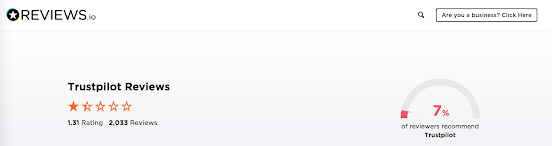
reviews of Trustpilot on Reviews.io


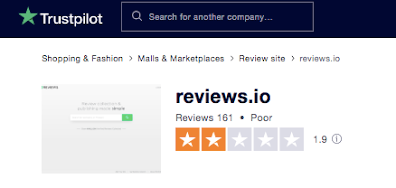
reviews of Reviews.io on Trustpilot


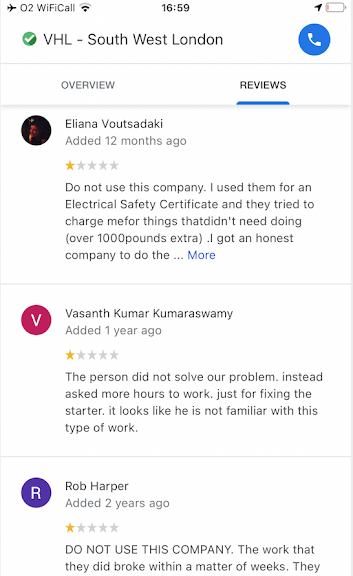
2.  They have attracted increasingly negative reviews of their own - just search for Trustpilot on Reviews.io or vice versa and you will see what we mean.


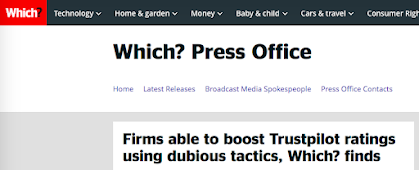
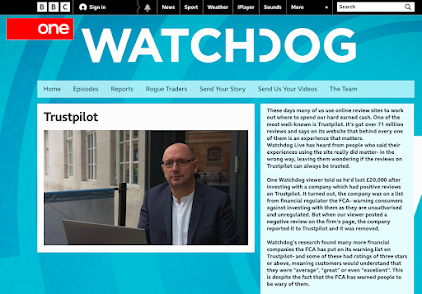
3.  Negative mainstream media coverage has followed; the last thing any business needs is the credibility of their reviews platform being called into question.


4.  Legal and compliance issues are enough to keep any corporate compliance officer continually at odds with their sales and marketing colleagues, as well as awake at night: 'We can't use/abuse customer reviews in that way!' - 'If we don't we'll look worse than our competitors.' 'But that's illegal.' 'How can we compete if we don't?'


There is a better - much better - way

Combine all of the advantages of Google reviews:
  • visibility
  • credibility
  • SEO credit
  • longevity
With the following:
  • owning your own reviews - not possible with either Google or the review sites
  • moderation - having your customers' reviews checked for factual accuracy and potentially misleading statements before publication
And it's called review management, but as far as service and professional businesses are concerned it's called 'having your cake and eating it.' All the wonderful benefits of Google reviews combined with a compliant and moderated platform that will enable everyone involved to relax in the sure knowledge that they are not flouting the law*.

We invented it and we have proven it, year in year out, for more than a decade now: legally compliant, owning your own reviews, displaying them on your website, getting them across to Google, contributing to your SEO.

And all for the cost of a mobile phone contract - except that we are so confident of the results we generate for our clients that we don't have contracts!


*the Law

This is a biggie; just because your main competitor has hundreds of great Google reviews and scores 4.8 doesn't mean you should emulate their review strategy. Just asking nailed-on happy customers to write reviews and/or running customer surveys to find out who loves you and then inviting them to write reviews is illegal. It also hands a big win to any competitor who understands just how the business gets to look so great.

One of the first rules of review management is that the business must be able to answer any potential criticism as to the veracity of their reviews - all our clients can point to the invitation on their websites (see 'Write a review' at top right)...


...and our 'promise to publish'. To see just how effective this can be just take a minute to read this story...


How about that? Now read some more detailed numbers here. And remember, you doctors and lawyers out there, these apply equally to you too!


In summary...

It often helps if the business asks itself the following simple questions:

1.  Does looking great on Google matter to us (you might be surprised how many answer 'No' to that question - online retailers, large 'monopolies' - think mobile phone/utilities)? If the answer is 'yes' - as it should be for all service and professional businesses - then please read on. For businesses that already have Google reviews please pay especial attention to point 2.

2.  Does compliance with the law matter? We apologise for even asking this question but still, in 2022, at last half the businesses we speak to are horrified to find that they are unwittingly breaking the law - usually by cherry-picking or gating. The detail is here, but if your business is at all vulnerable to a well-written malicious review - and all service or professional businesses are - we suggest that a moderated review management system (see 3. below) is absolutely essential. 

Just speak to any business that has been a victim of such a review or read this article about a law firm that ended up having to sue one of its own clients because the review they had written was costing them tens of thousands in lost fees (as the judge in the case agreed).

3.  If looking great on Google matters - score and volume - do negative reviews that are inaccurate, misleading or just plain unfair matter? Of course they do - everyone reads them, and they're the single main reason some businesses are afraid of engaging with Google reviews (as well as being the single main reason that a searcher won't click through to a business's website). You need an independently moderated review management system that checks every single review before it's published. Moderation is explained here.

4.  Does ranking on Google matter? Do we need to rank high in search and look good there as well? This question is probably best answered graphically; here is a local search that features one of our clients:


Their specific search?


That's not putting anyone off clicking or calling, is it?


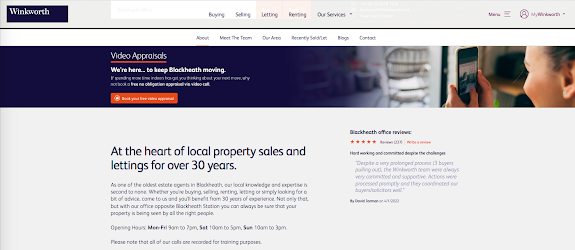
All legal, simple and most important of all: effective. Reviews from their own site showing with their listing and leading local search. Not looking bad on their own website either (where Google is pulling the information you can see in the search above)...


Price? Almost certainly less than the firm's daily petrol bill - per month! And no contract - ever.

Monday, 10 January 2022

HelpHound - Blog Index for 2022

There are now nearly 1,000 articles on this blog now, so we thought it might be helpful if we provide an index of 'essential reading'. 

If you cannot find the answer to your own query here you have three options...

    1. Call us - a quick call to 020 7100-2233 will resolve any questions you may have
    2. Email us - info@helphound.com
    3. Interrogate the blog - on the right you will see 'Search this blog'. Just type in a keyword or words and you may well find what you are looking for. If you still haven't found the answer we really need to hear from you, so please let us know!
So you can find the article that's most relevant we have broken the index down into sections:
  • Depending on the extent of your business's engagement with the most important, visible and influential reviews host of all: Google. 
  • Depending on your experience with other review solutions: review sites, aggregators and so on.
  • Sector-specific articles: legal, medical, financial etc.
  • Results. Saving the best for last: what will happen when your review management programme is correctly implemented and kicks into gear.

For a business that has yet to acquire any reviews:

Very few businesses in 2022 have no Google reviews. If one has none or very few this is invariably as a result of the justifiable fear of attracting inaccurate, misleading or just plain unfair reviews.

  • If this is the case this is the article for you. It maps the route your business will need to take to eliminate that 'fear factor' without, as is the case with so many businesses these days, flying in the face of the law.

In some ways this business is in an enviable position: once it adopts a review management strategy it will be in a position to measure its success very accurately indeed. After all, any uplift in clicks and calls post-implementation will be startlingly obvious and will almost certainly be attributable to one factor: their new review management strategy.


For a business with some, but less than 100 Google reviews:

It is very common for a business to invite its most loyal customers and connexions to write reviews, and then run out of steam. This is completely understandable but - wait for it - illegal (at least in the UK). So how to comply with the law and the regulations and get more reviews at the same time? 
Compliance won't hold you back - quite the opposite - or expose you to risk but it will mean you and your staff will be able to sleep at night.


For a business with many - more than 100 - Google reviews:

Again, the first step must be compliance. 'Cherry-picking' (selecting happy customers and then inviting them to write a Google review) and 'Gating' (sending a customer survey or using a little known reviews site to establish who your happy customers are and then inviting them - and only them - to write a review to Google) are both against the law; the latter is also against Google terms of service and, if detected, will result in all the business's reviews being removed.
  • Read this. It will reassure you that your business can reap all the rewards that come with having an impressive Google score alongside many great reviews and be bullet-proof when it comes to complying with the law.
  • Here's an article that specifically deals with gating. Imagine having dozens - or even hundreds - of great Google reviews and then losing them all overnight? That's what Google does to businesses it identifies as gating. No redress. No appeal. It's simply not worth the effort, especially when there's a legitimate alternative.

Both these articles will help explain why there's no need to cherry-pick or gate; adopting professional review management will protect and enhance your business's reputation, legally. 


For a business currently using a review site - Trustpilot - Feefo - Yelp etc.

See if yours is the kind of business - multi-line online retail, for instance - that can benefit from membership of a review site. And see why service businesses and the professions need a Google-focussed review management programme instead. 

It's no fault of the review sites, but it's rather like the Japanese car industry in the 60s and 70s: Google has just taken what's best of the service provided by the review sites and combined that with their domination of the search market and come up with a far more attractive alternative.

Google reviews are more visible and more credible - so businesses need to focus on getting them. They're the only reviews 90% of consumers will ever see. Your business needs Google reviews. 

But do remember to employ a moderator - see 'HelpHound's USP' below - because the influence works both ways: loads of great Google reviews drive business, a single inaccurate or misleading Google review can stop a business in its tracks.


For a business currently using a review aggregator - Reputation.com etc.

Whilst they look great, in theory, aggregators - sites that scour the web for reviews of your business and then display them on your website - have considerable downsides once you look under the bonnet.


Now for some sector-specific articles containing examples and advice:

The following professions are amongst those that most resisted review management back in the early days. Their logic - understandable, given that it takes years to build a reputation and one well-written negative review can undo all that work - was that...

  1. Their sphere of operations was complex and difficult for a lay person - their client or patient in these cases - to understand.
  2. Client - or patient - confidentiality was one of the cornerstones of their modus operandi; asking someone to effectively break that to write a review would be a bridge too far for many.
  3. Clients - and patients - would be extremely reluctant to reveal details of their personal experiences.
Interestingly, experience - long experience - has shown us that...
  1. Complexity: providing their reviews are moderated clients and patients are capable of writing extremely helpful and reassuring reviews that are hugely welcomed by prospective clients and patients.
  2. Confidentiality: the key here is to stress that writing the review is entirely at the client or patient's discretion. Those that are happy to write a review will do so, those that are not won't. There is no sign whatsoever of any hard feelings either way (although we do see the odd case of 'A - usually a friend or work colleague - was asked to write a review and I was not, please may I?').
  3. Reluctance: again, it's optional. Anyone who does not feel happy commenting won't do so and that's OK. But it's often surprising just how much detail someone who has been helped by a business will be prepared to go into.


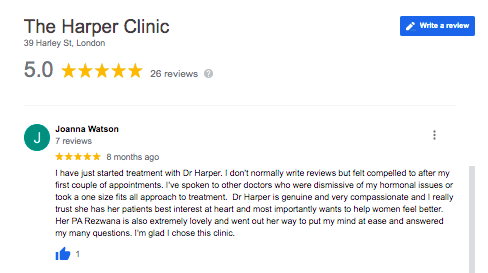
How much more personal and confidential can such a relationship be? This review, and the many others on this Harley Street clinic's site and Google listing show just how willing a grateful patient can be when it comes to responding to a well-worded request to post a review. And for the person searching for this kind of service? We'll leave that conclusion to you!

Here are articles that address issues specific to the professions...


HelpHound's key - and crucial - USP

Everything we do here is designed to make your business look as great as it is in all kinds of search as well as on its own website. But that would be all as nothing without moderation. 

We read every single review written to our client's website, before it is published there and before the reviewer is asked to post it to Google. This is what enables our clients to relax in the knowledge that it is highly unlikely that a factually inaccurate, potentially misleading or just plain unfair review will ever see the light of day.


And finally...Results!

The ultimate objective of professional review management:


The above are actual figures for a client from Google exactly six weeks after they joined HelpHound. We have seen better but we reckon most new clients in the professional sectors we specialise in will be happy with similar results, especially when they are sustained.


And to have our clients looking like this on their own websites:


Please read this review - and as many reviews on their website as you can - for it is those, the individual reviews, that prompt contact from potential clients, just as much as the pure numbers (review score and totals) if not more so. 


And like this in local search:


Local search is used by everyone when conducting their initial search for a service, even if the business has been referred by a friend and/or their advertising is impressive. Making an impression there is vital if calls and clicks are to flow. If you look carefully at this search - and even conduct a similar real-time search yourself - you will see Winkworth leading the Google 3-pack and organic search. 

Their Google score, combined with the absolute number of reviews, will reassure potential clients, certainly enough to prompt them to make initial contact. The score from their own reviews on their own website (the 4.9 and 237 just under their listing in organic search) reinforces the impression created by their Google score and reviews 


We've already mentioned the intangibles: being 100% compliant with the law, focussing on Google and so on, but here is the clincher for your CEO/CMO/CFO...